
What CRM Misses Between Sales Conversations
CRM tells you a deal moved to stage four. It rarely tells you why, who said what, or which promise is now overdue.
Persistent deal memory
Guide · Persistent deal memory
Every complex deal accumulates context: who said what, what was promised, what changed. Persistent deal memory keeps that context connected to its sources across conversations, so the next decision starts from what is actually known.

Persistent deal memory is the running, source-linked record of an opportunity: stakeholders and their roles, statements and who made them, commitments on both sides, open dependencies and the facts that changed over time. It differs from notes, which describe one meeting, and from CRM fields, which store a current value without the reasoning or history behind it.
| Meeting notes | CRM record | Persistent deal memory | |
|---|---|---|---|
| Scope | One conversation | Current field values | The whole opportunity over time |
| History | Scattered across documents | Usually overwritten | Changes kept with sources |
| Attribution | Often informal | Rarely captured | Each statement tied to a person and moment |
| Commitments | Listed once | Sometimes a task | Tracked until confirmed complete |
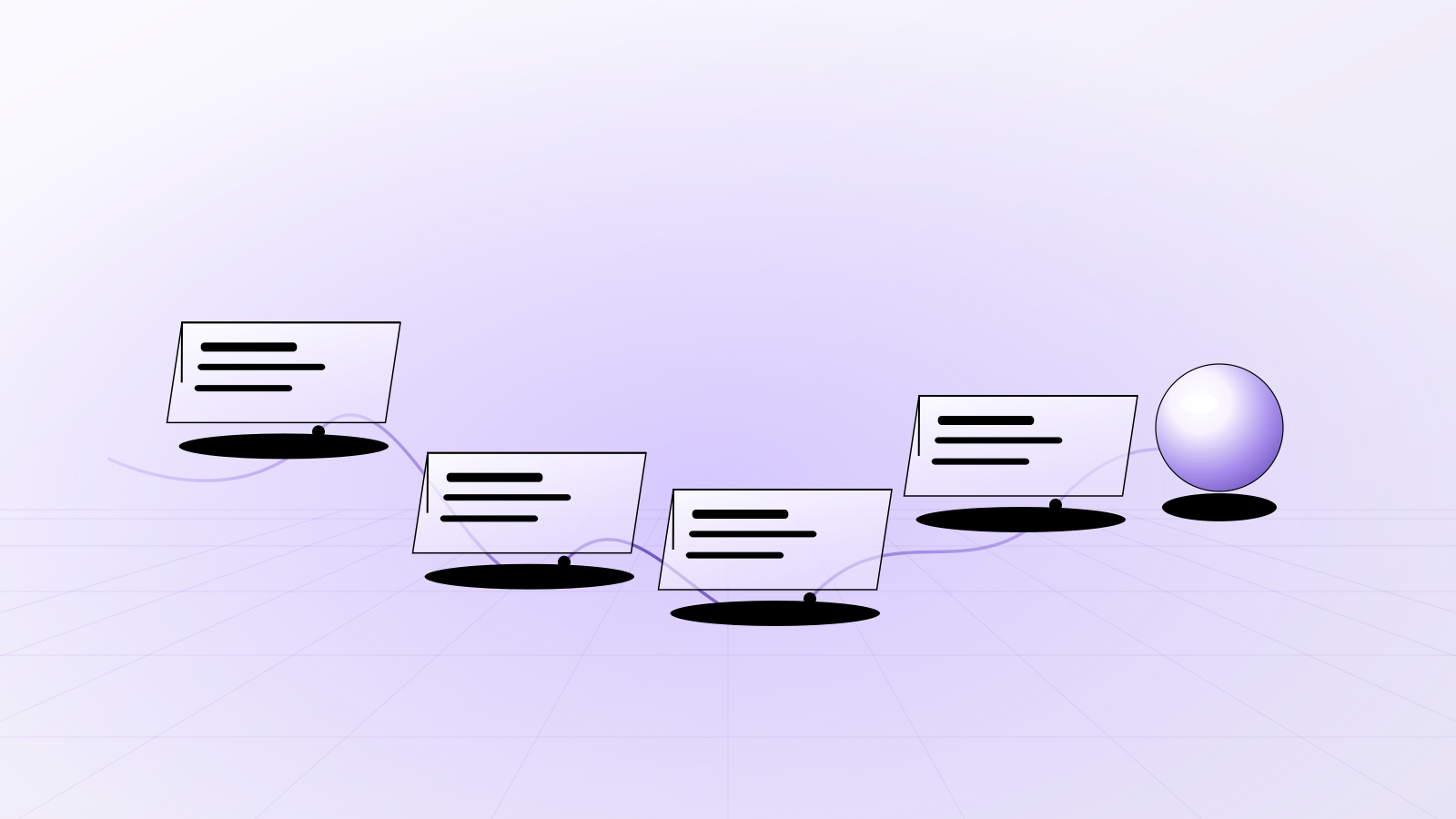
An example opportunity across four touchpoints:
The CRM still shows the original deal size. Memory shows why that number may be at risk, who introduced the doubt and what to ask the director next.
CRM tells you a deal moved to stage four. It rarely tells you why, who said what, or which promise is now overdue.
Persistent deal memory

Many deals don't end with a no — they end with nothing. A short confirmation call replaces uncertainty with shared next steps.
Persistent deal memory

Coaching often fixates on talk ratios and rebuttals. Many deals are lost because the rep doesn't understand how the buyer's organization decides.
Persistent deal memory

Pipeline reviews shouldn't be theatre. They exist to answer one question: is the buyer aligned, or just polite?
Persistent deal memory

Most dashboards describe what already happened. These five metrics, defined carefully, show what's working and what's about to break.
Persistent deal memory
A 30-minute walkthrough from conversations and CRM through persistent deal memory to deal strategy, Forecast and integrated Deal Rooms.
Book a demo (opens in a new tab)Conversations · CRM · Deal memory
DealscaleOne intelligence. The whole deal.